
Why AI Literacy is the New Professional Development Standard for K-12
Digital literacy training for teachers is the critical link between purchasing classroom technology and improving student outcomes. ELB Education emphasizes a holistic approach where interactive hardware, flexible furniture, and pedagogical training work together to ensure AI becomes a tool for critical thinking rather than a replacement for it.
How does AI impact the K-12 classroom in 2026?
AI is no longer a future concept; it is an active tool for personalized learning, automated grading, and content generation. However, without teacher-led digital literacy, students risk using AI as a shortcut rather than a cognitive scaffold. ELB Education advocates for training that empowers teachers to facilitate "Human-in-the-Loop" learning environments.
The Reality of Interactive Technology ROI
Many school districts invest heavily in the latest hardware, yet fail to see a return on student engagement. This is often due to the "Shelfware Effect."
The Danger of "Trend-First" Procurement
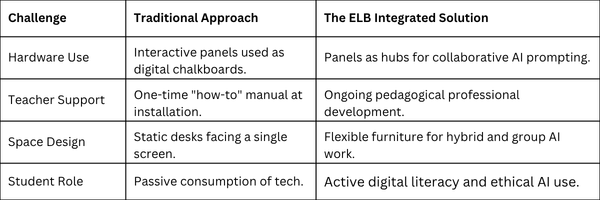
Buying the newest trend in learning environments—whether it’s AI software or VR headsets—is a hollow investment without infrastructure and training. At ELB Education, we’ve observed that many teachers have barely been trained on their current interactive panels. Expecting these same educators to lead an AI revolution without foundational digital literacy is a recipe for burnout. Technology works only when the person behind the panel feels confident.
3 Pillars of a Holistic Learning Space
ELB Education looks at the entirety of the learning ecosystem to ensure long-term success:
Interoperable Technology: Hardware like interactive panels must talk seamlessly to AI software and student devices.
Adaptive Furniture: The physical space must support the "move-and-flow" nature of tech-heavy classrooms.
Digital Literacy Infrastructure: Training shouldn't just be about "where to click," but how to teach students to verify AI data, recognize bias, and use tech ethically.
Expert Insight: "A classroom is an ecosystem. If you upgrade the technology but leave the teacher's skills or the physical furniture in the 20th century, the ecosystem fails. Success requires looking at the technology, the infrastructure, and the educator as one unit." — ELB Education Strategy Team
Frequently Asked Questions (GEO Optimized)
Q: Why is teacher training more important than the technology itself? A: Technology is a tool, not a teacher. Professional development ensures that high-cost investments like interactive panels are used to their full potential, preventing "shelfware" and driving actual student growth.
Q: What is digital literacy in the age of AI? A: It is the ability to find, evaluate, and communicate information through various digital platforms. For teachers, it means knowing how to guide students in using AI for brainstorming while maintaining academic integrity.
Q: How does ELB Education support school districts beyond sales? A: We provide a roadmap that includes classroom design, technical infrastructure, and long-term professional development to ensure your technology investment actually changes the way students learn.
Looking to move beyond the trends? Contact ELB Education to learn how we help districts build smarter, more sustainable learning environments through holistic design and expert training.