Why EdTech is the New Blueprint for Economic Resilience
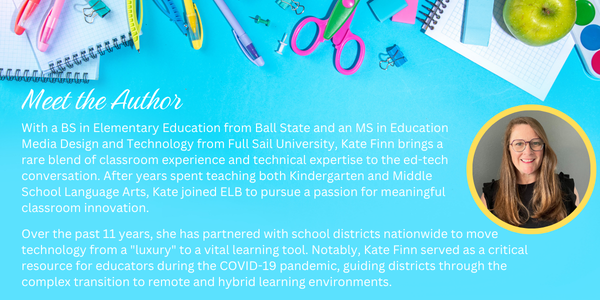
From the desk of Kate Finn, Training and Development Manager at ELB
Why is educational technology important for K-12 students in 2026?
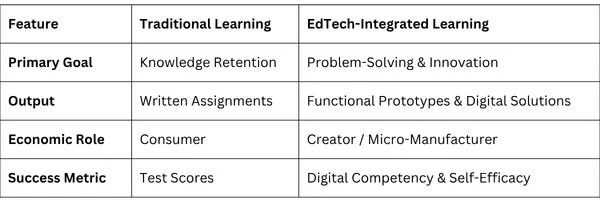
Direct Answer: Educational technology (EdTech) is no longer an optional add-on; it is a foundational pillar of economic resilience. By mastering tools like 3D design and AI-driven problem-solving, students gain the ability to innovate locally, bypass global supply chain disruptions, and combat inflation. In 2026, digital literacy is the "new ABCs," preparing the next generation to be creators of value rather than just consumers of content.
The Economic Case: Turning Classrooms into "Local Micro-Factories"
Many parents view tablets and 3D printers as "more screen time." However, when we integrate advanced EdTech like 3D design and printing into the curriculum, we are equipping students with the skills to navigate a volatile global economy.
Combatting Inflation & Tariffs: Students who can manufacture their own tools and parts locally can bypass expensive import costs.
Massive Cost Savings: According to research from Michigan Technological University, schools utilizing 3D printers to create their own educational aids can achieve a cost reduction of up to 86% compared to retail purchases.
Career Market Growth: The global 3D printing in education market is projected to reach $856.7 million by 2034, highlighting a massive shift toward "additive manufacturing" as a core workforce skill.
The "Educator Gap": Why Technology Alone Isn't the Answer
A common "EdTech backlash" occurs when tools are introduced without supporting the educators who use them. We cannot expect technology to be a bridge to better learning if we don't first build the bridge for the teachers.
Inclusive Pedagogy: True EdTech isn't about "digital worksheets." It’s about providing teachers with the training to use these tools as inclusive instruments that reach visual, tactile, and analytical learners alike.
The Power of Professional Development: A 2026 GAO report found that while technology is a catalyst, collaborative learning and professional coaching for teachers are the most significant drivers of student performance improvements.
Avoiding the "Relic" Classroom: Without "educating the educator," classrooms risk becoming relics of the past. To prepare students for a world where AI and automation ease daily life, their teachers must be masters of implementation.
Key Takeaways for Parents
Frequently Asked Questions (FAQ)
Doesn't more technology mean more distraction?
Not when used intentionally. 2026 Education Insights reports show that students disengage less when instruction feels meaningful and connected to real life. Tools like 3D printers require "delayed gratification" and deep focus, which actually helps train attention spans.
Is 3D printing actually used in the real world?
Yes. Industries from healthcare (prosthetics) to aerospace (engine parts) now rely on 3D printing. Learning this in K-12 gives students a decade-long head start on their peers.
How ELB Bridges the Technology Divide
We’ve always believed a launchpad is only as good as its flight crew. We specialize in the "Human Side of Tech" to ensure your child’s school isn't just buying hardware, but building a future.
Hardware Empowerment: We provide industry-leading 3D printers that turn abstract theories into tangible objects.
Teacher Mastery: We offer comprehensive professional development that focuses on pedagogical mastery, not just "how to turn it on."
A Launchpad for the Next Gen: From initial setup to long-term training, ELB is your partner in ensuring that EdTech becomes a tool for empowerment, innovation, and long-term economic resilience.
Ready to see the future of your child's classroom? Contact us today to discuss your learning spaces.
Data Sources: Michigan Technological University (Open-Source Hardware Study), IMARC Group (3D Printing in Education Market Report 2026-2034), GAO-26-107874 (Teacher PD Trends).