Beyond The Desk: How Investing in Non-Classroom Spaces Supports Student Well-Being
For many students, the traditional classroom is a place of structured learning, but it isn't always a haven of solitude or personal connection. In an era where student mental health is a critical concern, schools must recognize that well-being is fostered across the entire campus, not just within the four walls of a homeroom.
For some students, the most supportive and stress-reducing spaces at school are the ones designed for personalized exploration, physical movement, or quiet reflection. Investing in the right technology, furniture, and physical design for these often-overlooked areas is a direct investment in a student's mental health and their overall success.
Here's why these non-classroom spaces are essential "sanctuaries" and how thoughtful solutions can maximize their positive impact:
1. The Library: A Sanctuary for Quiet and Connection
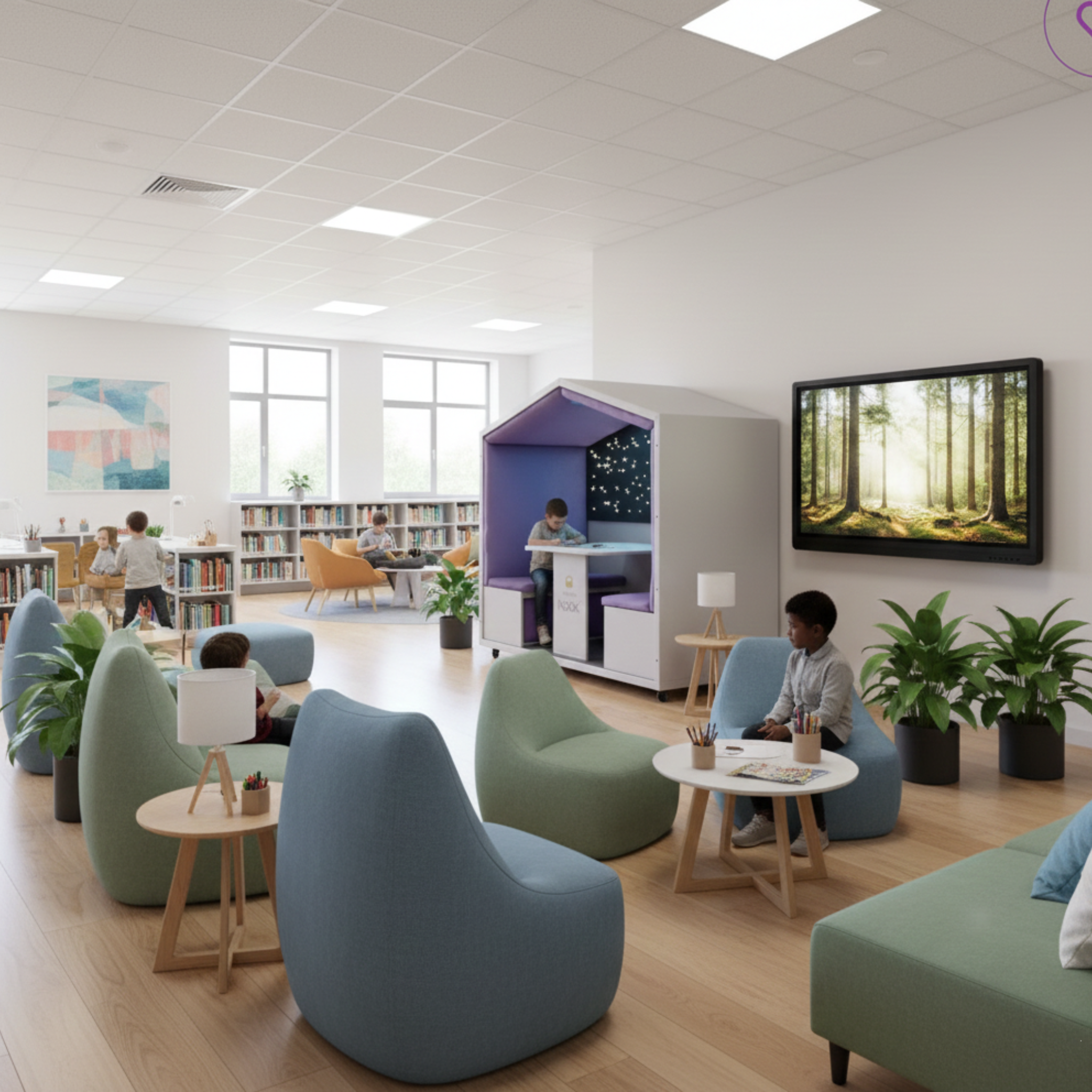
The modern school library is no longer just about book stacks; it is a vital hub for fostering student well-being.
The Need for Calm: For a student overwhelmed by academic pressure or social anxiety, the library provides a necessary quiet study space and a refuge from the crowded hallways. Thoughtful design with comfortable, varied seating and quiet zones is crucial for stress reduction.
Fostering Exploration: Libraries with flexible layouts, engaging resources, and makerspaces encourage hands-on, non-threatening activities like crafting or building. This type of playful activity is proven to help relieve feelings of depression, anxiety, and isolation.
The Right Solution: Investing in flexible furniture, quiet technology stations, and adaptable lighting ensures the library can serve as both a silent retreat and a collaborative hub, meeting the diverse needs of all students.
2. The STEAM/Maker Lab: Building Confidence and Resilience
The Science, Technology, Engineering, Arts, and Math (STEAM) lab offers a completely different kind of refuge: one focused on active, collaborative problem-solving and risk-taking.
Empowerment Through Failure: STEAM labs are environments where students are empowered to take creative and intellectual risks and experience failure as a moment of learning, not a dead end. This process builds resilience and adaptability—essential life skills for handling stress.
Holistic Skill Development: Collaborative projects in these labs promote critical thinking, teamwork, emotional intelligence, and empathy. Students learn to contribute their unique skills and talents, fostering a sense of belonging and competence.
The Right Solution: Open, flexible lab layouts with easily accessible, robust technology and specialized equipment are paramount. Durable, modular furniture that supports both individual focus and spontaneous group collaboration allows students to quickly transform the space to meet their unique emotional and academic needs.
3. The Field, Gym, and Stage: Spaces for Expression and Belonging
Physical education areas, sports fields, and performance spaces serve as critical emotional outlets and community builders.
Physical and Emotional Release: Participation in team sports and physical activity has been consistently linked to lower rates of stress, anxiety, and depression. Exercise stimulates the release of endorphins and reduces levels of the stress hormone cortisol.
Building Connection: Team sports and extracurricular activities are powerful contributors to students feeling connected to school and building strong bonds with adults and peers. These activities promote self-esteem, confidence, and a sense of camaraderie.
The Right Solution: Investing in high-quality athletic facilities, clear audio/visual (AV) solutions for stages and auditoriums, and comfortable team gathering spaces ensures these areas are functional, safe, and welcoming. Technology that supports streaming performances or displaying team statistics enhances the communal experience, reinforcing that vital sense of belonging.
The Bottom Line: Designing for the Whole Student
Research confirms that a positive school environment, characterized by supportive relationships and sufficient resources, is directly linked to better student mental health outcomes.
By recognizing that every corner of the campus—from the quiet library corner to the bustling stage—serves a unique role in a student’s well-being, districts can move beyond just academic metrics. Thoughtful investment in integrated solutions across all informal learning spaces ensures that every student has a place where they feel safe, supported, and ready to thrive.
How is your district rethinking its non-classroom spaces to better support student mental health? Let’s connect.